A thoughtful response from a family photographer about consent, online privacy, AI misuse, and why fear should not replace informed choices.
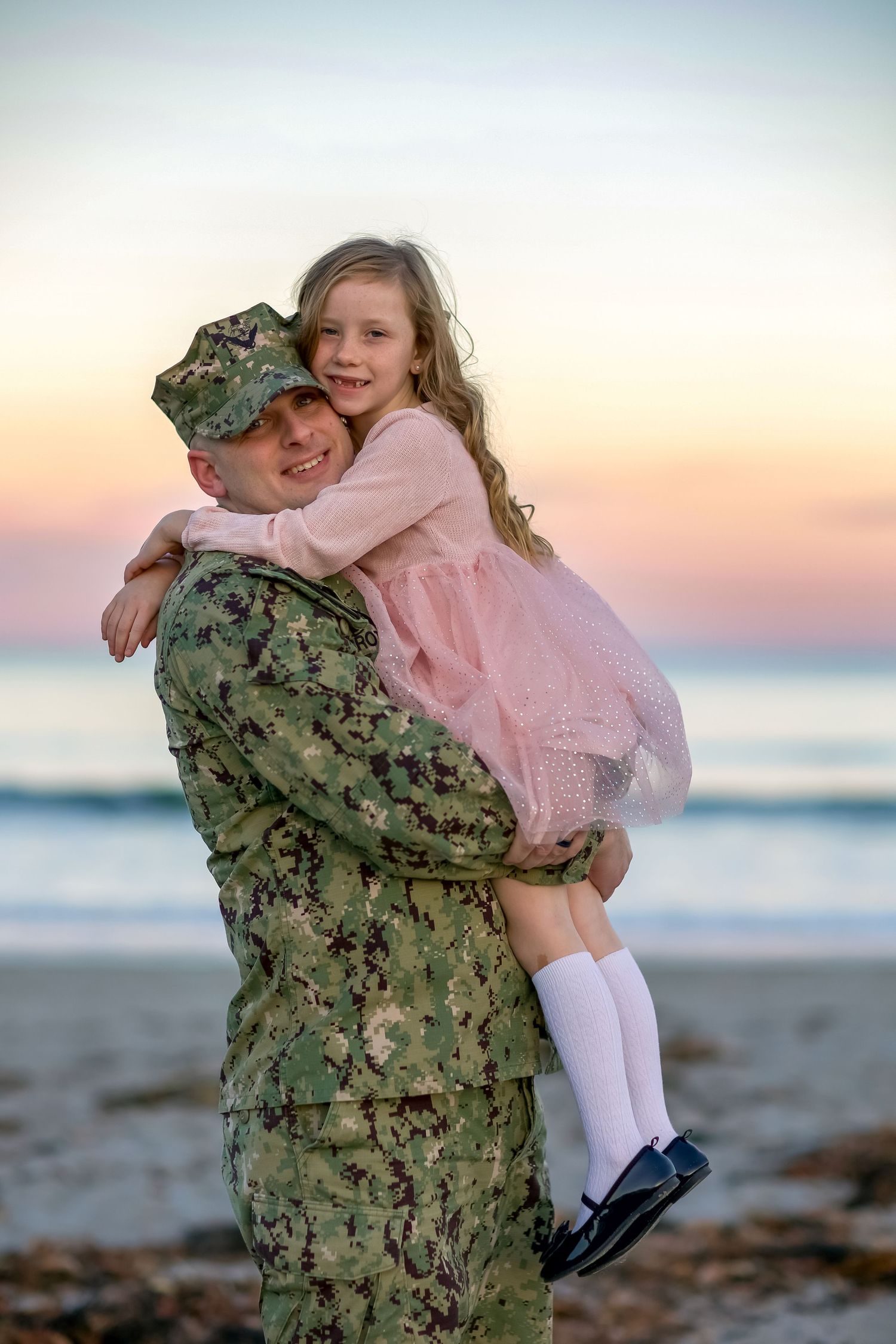
Over the past several days, photographers’ social-media feeds have filled with nearly identical, copy-and-paste announcements about a recent federal appeals-court ruling involving AI-generated child sexual abuse material, commonly referred to as CSAM. One photographer posts an alarming statement.
Others copy it, slightly reword it, and announce that, effective immediately, children’s faces will be blurred or children will disappear from their pages entirely. Then still more photographers feel pressured to follow so nobody thinks they care less about children.
I am going to say what apparently needs to be said: blurring children’s faces does not solve the problem being discussed, and the pressure for photographers to suddenly do so has become a little silly.
The subject itself is not silly. Child exploitation is horrifying. The misuse of AI is real. Protecting children could not be more serious. What is silly is turning that serious issue into a viral photography trend without reading the ruling, understanding what it covers, or asking whether smearing a blur over a child’s face actually prevents the harm being discussed.
I understand where this reaction is coming from. As photographers...and, in many cases, as parents ourselves: we care deeply about protecting children. No photograph, portfolio, social-media post, or marketing opportunity is more important than a child’s safety. The fact that artificial intelligence can be used to manipulate innocent photographs in horrific ways is disturbing, and it deserves serious attention.
Some of these posts are undoubtedly well-intentioned. Good intentions, however, do not make a claim accurate or an action effective. The announcements are reactionary, needlessly frightening to parents, and create a misleading impression of safety. Concern should be paired with an accurate understanding of what the court actually decided, what face-blurring can and cannot accomplish, and what responsibilities professional photographers already have toward their clients.
The ruling did not make ordinary photographs of children unsafe overnight. It did not make it illegal for photographers to share appropriate family photographs with parental permission. It did not eliminate laws protecting real children from exploitation. And it did not impose a new requirement on family photographers to blur every child’s face or remove children from their portfolios.
We should do our due diligence. We should also be careful not to spread panic, misstate the law, or perform a highly visible gesture that cannot provide the protection parents may understandably assume it does.
My position is clear: I will not be blurring children’s faces on my photography page. I will continue giving parents and legal guardians the choice to opt out of having their sneak previews or any other session photographs shared publicly. If they opt out, I will not post the photographs at all. That is more honest and more respectful than publishing their children’s bodies and surroundings with an artificial blur placed over their faces.
I also refuse to accept the suggestion...sometimes stated and sometimes merely implied: that photographers who continue sharing appropriate family photographs with informed parental consent are now careless, uninformed, or part of the problem.
We are not.
There is a predictable pattern on social media: a disturbing headline appears, someone writes an emotional response, and within hours businesses everywhere are posting variations of the same statement. Very few people stop to read the primary source. Very few separate what a court actually held from what a viral caption claims it held. Almost nobody asks whether the announced solution addresses the supposed threat.
That is exactly what is happening here.
A photographer can blur one hundred children’s faces, write a moving paragraph about safety, and receive praise for taking a stand. Yet none of that prevents an offender from downloading the photographs, manipulating the visible bodies, reconstructing what was obscured, or generating completely artificial material. It does not change the court ruling. It does not improve the law. It does not stop the technology. It does not remove other photographs of those children from parents’ pages, schools, sports teams, relatives’ accounts, public events, or the countless cameras surrounding all of us.
It does make the photographer look as though they have done something decisive.
That is why I view this wave of copied announcements as performative, whether or not that is the individual photographer’s intention. The visible performance is substantial; the actual protection from the stated threat is not.
Child safety is too important to be reduced to a social-media chain letter. Before frightening parents or pressuring an entire industry to imitate the latest announcement, photographers should read the ruling, investigate what AI can actually do, review their own consent practices, and explain the limits of public posting honestly.
The case is United States v. Anderegg, decided by the United States Court of Appeals for the Seventh Circuit on August 25, 2026. The Seventh Circuit covers Illinois, Indiana, and Wisconsin.
According to the court’s opinion, the defendant allegedly used generative-AI software to create photorealistic, sexually explicit images depicting prepubescent children. The government conceded that the images involved in the disputed count did not depict an actual child and could not be connected to an actual child.
The defendant was charged with multiple offenses, including producing and distributing the material, possessing it, and transferring sexually explicit material to a minor. The narrow issue on appeal was whether one federal charge could constitutionally punish the defendant merely for possessing wholly artificial, obscene images privately in his home when no real child was depicted.
The Seventh Circuit affirmed the dismissal of that possession count. Its reasoning relied on earlier Supreme Court precedent recognizing constitutional protection for the private possession of obscene material in the home, combined with precedent distinguishing virtual images from CSAM created through the abuse of real children.
That is deeply troubling to many people, including the judges themselves. The opinion openly discusses the serious problems created by rapidly developing AI technology and calls attention to the need for the Supreme Court and lawmakers to address the gap.
However, the ruling was much narrower than many social-media summaries suggest.
It did not hold that all AI-generated CSAM is legal. It did not create a general right to produce or distribute it. It did not protect material depicting the abuse of an actual child. It did not authorize anyone to take a real child’s photograph and turn it into sexual material. And it did not dismiss the defendant’s remaining production, distribution, or transfer-related charges.
Most importantly for photographers, the ruling did not regulate family photography, marketing photographs, model releases, client consent, or the publication of ordinary portraits of children.
Because Maine is in the First Circuit: not the Seventh Circuit...the decision is also not directly controlling precedent for a Maine photography business. It may be discussed or cited in future litigation, and the broader legal questions absolutely deserve attention, but it does not create a new rule that Maine photographers must follow when publishing their work.
The full decision is available in the Seventh Circuit’s official opinion.
None of this means photographers should ignore the ways artificial intelligence can be abused. There are documented cases in which offenders have used ordinary, non-explicit photographs of real children to create manipulated sexual images. In one federal case, the Department of Justice said a former school employee allegedly used non-explicit photographs of children in his care to produce AI-generated sexual depictions. In another, a man was sentenced after using photographs of women and children he knew to create manipulated CSAM.
Those cases demonstrate something important: the underlying danger is the person committing the abuse and the technology being misused: not the recent Seventh Circuit decision itself. They also demonstrate that law enforcement continues to investigate and prosecute conduct involving the manipulation of real children’s images. See the Justice Department’s reports concerning the Minnesota case and a Kansas prosecution involving manipulated photographs.
The possibility of image theft and manipulation existed before August 25. The ruling did not suddenly provide offenders with technology, access, or permission they lacked the day before. That does not mean we shrug our shoulders. It means our response should address the actual risk instead of creating the appearance of safety.
Blurring a face can provide a limited degree of anonymity from ordinary viewers. That is all. It does not protect the photograph from the specific AI misuse now frightening photographers and parents.
But blurring a face does not make the photograph private. It does not prevent the photograph from being downloaded, copied, screenshotted, altered, or placed into an AI system. It does not erase the child’s body, clothing, hair, surroundings, relatives, school logo, sports uniform, home, or other details that might identify them. Modern tools may also replace or reconstruct a face, alter clothing and bodies, or generate missing elements.
The reverse is equally true: an offender does not need a photograph showing a child’s entire body. A clear photograph of a face can potentially be attached to an entirely fabricated body. A photograph of a body with the face blurred can be given a fabricated face. Generative AI can also create wholly artificial people without using one specific child’s photograph at all.
Therefore, a face blur should not be presented as protection from AI exploitation. It may conceal one identifying feature from a casual human viewer, but it is not a technical barrier against abuse. When the stated concern is that someone could use the photograph as raw material for AI, the photograph remains available as raw material.
If a photographer’s goal is to ensure that a particular photograph cannot be used by anyone online, the most meaningful step is not to publish that photograph publicly. Even then, no photographer can promise absolute control. Photographs may be published elsewhere by parents, relatives, schools, teams, or other people, and images stored in private or password-protected accounts are not magically immune from unauthorized access, compromised credentials, data breaches, or other forms of theft. Privacy and security measures can reduce exposure and risk; they cannot guarantee that a digital image will never be obtained or misused.
Once any image is made public, no photographer can honestly guarantee that it will never be copied or misused.
Every photographer has the right to decide what appears in their portfolio, and every parent has the right to decide whether a child’s photograph may be shared. If someone decides never to show children publicly again, that is their choice. But personal choice is different from publicly presenting an ineffective measure as a new standard of child protection.
What bothers me is the implication created by dramatic “effective immediately” announcements showing beautifully photographed families with featureless, blurred faces: that the photographer has now solved...or meaningfully prevented
the danger created by AI.
They have not.
Calling the blur “an extra step” to protect young clients sounds reassuring, but we need to ask what that step actually protects them from. It does not stop the danger being invoked. The child’s body remains visible. Their hair, clothing, approximate age, siblings, parents, and location may remain visible. In some examples, the adults’ faces are clear, making the family potentially recognizable even though the children’s faces are obscured. The photograph is still publicly accessible and can still be copied. AI can fabricate a face, replace clothing, alter a body, or construct an entirely different scene. It can also generate abusive material without that photograph.
The blur may stop an ordinary viewer from recognizing the child’s face at first glance. That is a limited privacy benefit, and families are free to choose it. But it does not justify telling the public...directly or by implication: that the child is now protected from AI exploitation.
There is also something contradictory about claiming to protect a child’s privacy while continuing to use the child’s body, family, and session for public marketing. If a child’s appearance is considered too private to publish, why publish the rest of the child and family at all? In my view, the more consistent answer is to honor the family’s privacy by not posting the photograph.
This trend is not helping families understand the risk. It is frightening parents, pressuring photographers to prove that they care, and encouraging everyone to repeat the same gesture while the actual technical vulnerability remains. A frightening problem deserves more than a frightening-looking edit. It deserves accurate information, meaningful consent, thoughtful publication practices, and laws capable of addressing the people who create and distribute abusive material.
It is true that people determined to cause harm may continue trying to do so regardless of what responsible photographers do. AI can create an entirely fabricated child, reconstruct missing portions of an image, or combine information from many different sources. Removing one innocent family photographer’s portfolio will not eliminate predatory behavior or abusive technology.
At the same time, “bad people will be bad” should not become an excuse to ignore reasonable precautions. We may not be able to eliminate every conceivable risk, but we can avoid unnecessarily increasing a child’s exposure. There is a responsible middle ground between acting as though no danger exists and dismantling an entire family-photography business out of fear.
Due diligence means understanding what we can control and being honest about what we cannot.
As photographers, we can control whether we obtain permission. We can control what kinds of images we choose for marketing. We can avoid publishing sensitive photographs or unnecessary identifying information. We can respect a parent who does not want a child shown online. We can maintain secure galleries and professional data practices. We can remove an image if a family later develops a serious concern, even when our contract may technically allow its use.
What we cannot do is guarantee that a public image will never be saved, altered, or viewed by someone with bad intentions. Blurring a face, adding a watermark, disabling right-clicking, or writing “do not copy” cannot create that guarantee.
A measured child-privacy policy may include the following practices:
Obtain clear permission
Parents or legal guardians should understand whether images may be used on a photographer’s website, social-media accounts, blog, printed portfolio, advertising materials, or competition submissions. Permission should not be hidden behind confusing language.
Make declining easy and judgment-free
Some parents are comfortable having their children featured. Others are not. Some children may be in foster care, involved in a custody dispute, escaping an unsafe situation, or subject to another concern that the photographer does not know about. A family should never be pressured or made to feel that declining publication will affect the quality of its service.
Consider the child as well as the legal release
A parent or guardian generally makes the legal decision for a minor, but older children can have meaningful opinions about their own privacy. When appropriate, including the child in the conversation is respectful and wise.
Avoid unnecessary identifying information
A beautiful portrait does not need to be accompanied by a child’s full name, school, daily schedule, exact home address, team information, or live location. Photographers can also delay posting until after a family has left a location rather than sharing its whereabouts in real time.
Select portfolio images thoughtfully
There is rarely a legitimate business reason to publish photographs involving significant undress, private moments, bathroom or bathing situations, or anything a child may reasonably find embarrassing later. Childhood deserves dignity.
Use secure delivery practices
Client galleries should use appropriate privacy controls, passwords or PINs where available, reputable delivery platforms, and limited access. Photographers should keep software updated and should not retain sensitive files indefinitely without a business purpose.
Explain the limits honestly
Watermarks and lower-resolution web files may discourage ordinary commercial theft, but they are not guarantees against AI manipulation. Face-blurring can offer some anonymity, but it does not render an image unusable. Parents deserve accurate information rather than promises no photographer can keep.
Children are not marketing objects, but they are part of families...and family photography has real value. Photographs preserve relationships, personalities, connection, growth, and love. They show parents what an experience with a photographer can feel like, and they help families find an artist whose work reflects the way they hope to remember their own lives.
If every responsible photographer removes children from public view while the people misusing technology continue doing what they do, we have not solved the underlying problem. We have simply allowed fear to determine how innocent families and legitimate artists represent childhood.
That does not mean every child must be posted. It means the decision should belong to the family after a clear and honest conversation...not to online panic, misinformation, or pressure from other photographers.
Different photographers may reach different personal decisions. A photographer may choose never to post minors, and that boundary deserves respect. Another may show only anonymous details or photographs taken from behind. Another may continue publishing appropriate family portraits with express parental permission. None of those choices should be marketed as a universal guarantee of safety.
I respect every family’s privacy. I have always obtained client permission before using photographs publicly, and I will continue giving parents and legal guardians the opportunity to opt out of having sneak previews or other session images shared. If a family does not want its photographs posted, I will not post them. That choice will be honored without pressure, judgment, or any reduction in the care I give their session and gallery.
I will not begin blurring children’s faces on my photography pages.
That is not because I dismiss the danger or take child privacy lightly. It is because blurring a face does not prevent a photograph from being copied, manipulated, or used as source material. It can obscure one identifying feature, but it cannot provide the level of protection some public announcements are suggesting. I do not want to offer parents a visual symbol of safety that technology can easily work around.
Blurring would also fundamentally change the photographs I create. Family photography is about connection: the expression on a child’s face, the way a parent looks at them, the joy between siblings, and the fleeting details that make a family who they are. Covering a child’s face while leaving the rest of the image public neither preserves the full meaning of that photograph nor makes the underlying file truly secure.
For my business, the more honest choice is straightforward: with permission, I may share an appropriate photograph as it was intended to be seen. Without permission, I will not share that photograph publicly at all. Parents do not have to settle for having their child posted with a blurred face. They can choose complete nonpublication through the opt-out I provide.
I will continue to exercise care in the photographs and information I publish. I will avoid sharing unnecessary identifying details, choose images thoughtfully, and take reasonable steps to protect private galleries and client files.
I will also be honest: no photographer, platform, watermark, or blurred face can promise complete control after an image has been published online. Pretending otherwise does not protect families. Informed consent, thoughtful image selection, limited identifying information, secure delivery, and respect for each family’s boundaries provide a more meaningful approach.
The recent court decision is concerning, and the legal system must continue confronting the ways AI can be used to exploit children. But the decision did not change the rules for ordinary family photographers. It did not make sharing a child’s portrait with parental permission illegal, and it did not require us to erase children from our work.
Our responsibility is to remain informed, careful, and honest: not reactionary. I can protect privacy, respect consent, give parents a genuine choice about sneak previews, and perform my due diligence without pretending that responsible photographers caused this danger or that blurring every face will make it disappear.
Children deserve protection. Families deserve choices. And both deserve truthful information about what genuinely improves privacy and what merely creates the appearance of it.
*This article provides general information and reflects my professional approach as a photographer. It is not legal advice. Photographers should consult a qualified attorney regarding their own contracts, model releases, local laws, and individual circumstances.